Other Blogs


PLEASE VISIT MY OTHER 2 BLOG
Stories; very short, short and long: http://greyliteratureandlinguistics.blogspot.ca/

Jewish atrocities in Palestine

Jewish atrocities in Palestine
Gaza children buried alive
Showing posts with label War. Show all posts

Saturday, October 3, 2015

SYRIA: Syrian crisis: Russia air strikes 'strengthen IS'


Areas held by the US-backed Free Syrian Army have reportedly been hit by Russian strikes
  
Syrian crisis: Russia air strikes 'strengthen IS' 

US President Barack Obama has said the Russian bombing campaign in Syria in support of President Bashar al-Assad is driving moderate opposition underground and "only strengthening" Islamic State.

Mr Obama said he rejected the Russian assertion that all armed opponents of the "brutal" Mr Assad were terrorists. 

Moscow insists its air strikes - which began on Wednesday - are targeting IS.


But the Syrian opposition and others have suggested non-IS rebels are bearing the brunt of Russian attacks.


Russia said its aircraft had hit IS command centres, arms depots and military vehicles. Targets included the IS stronghold of Raqqa, but also Aleppo, Hama and Idlib - provinces with little IS presence. 

Watch videos and read full article here


1 October 2015 
How Putin blindsided the US
12 March 2015


Tuesday, August 14, 2012

ISRAEL: Lengthy?!


Lengthy Iran conflict likely to cost Israeli economy billions of shekels

Former finance ministry director general says nuclear Iran involves considerable economic cost to Israel, adds that war with Iran would be much more expensive than Second Lebanon War.

By Moti Bassok and Hagai Amit | Aug.14, 2012 | 4:59 AM

In the heart of the Jerusalem hills is a "pit" which, like its twin in the Tel Aviv headquarters of the Defense Ministry, is intended for use by top government officials in the event of a national security emergency.

It's safe to assume that, in light of growing talks during the past few weeks about an Israeli strike on Iranian nuclear facilities, the pits have been getting thorough inspections and sprucing up.

Construction on the Jerusalem underground war room began in 2002, under Prime Minister Ariel Sharon, and it took a few years and somewhere between NIS 500 million and NIS 1 billion to complete.

In the event of an Israeli strike on Iran and an anticipated Iranian counterstrike, Prime Minister Benjamin Netanyahu and the core of government activities will likely move to the pit in the Jerusalem hills, while Defense Minister Ehud Barak and the top commanders of the Israel Defense Forces can be expected to go underground in Tel Aviv.

They aren't the only ones preparing for an emergency. The Bank of Israel, for example, has its own underground hideaway, more than an hour's drive from Jerusalem, as does the Finance Ministry, while the Central Bureau of Statistics protects its precious data from nuclear attack with radiation-proof storage facilities.

Price for no war, too

While all government ministries and top agencies have protocols in place in the event of war with Iran, including an Iranian counter-attack against Israel, most are tight-lipped about the details. And while no one knows whether Israel will attack Iran or how Iran would respond, what is known is that a war with Iran could cost Israel tens of billions of shekels.

Yarom Ariav, Finance Ministry director general from 2007-2009, is considered an expert in defense budgets.

"Before talking about the implications of war with Iran, it must be said that the alternative carries a price, too. A nuclear Iran involves considerable economic cost to Israel, from its effect on our economic rating to large security outlays," Ariav points out.

He notes that after the Second Lebanon War of 2006 - which lasted 34 days, involved only one front and did not require full troop deployment - the treasury issued an NIS 8.2 billion extraordinary allocation to refill the IDF's emergency armories. In addition, the state paid out NIS 7 billion in compensation and rebuilding costs after the war.

"And that was before the expensive weapons systems we have now - the Arrow, Magic Wand and Iron Dome," Ariav notes, adding that a war with Iran would be much more expensive.

"There's also the collateral damage. Israel's daily domestic product is around NIS 3 billion per day. The question is how many days the economy would be paralyzed if war breaks out. If 50% of the economy is paralyzed, that's a loss of NIS 1.5 billion a day, NIS 45 billion a month," Ariav notes, adding that the long-term effects cannot be forgotten.

"Economists called the decade after the Yom Kippur War 'the lost decade.' There was a decline in the standard of living. Enormous amounts were diverted into restoring the military establishment, at the expense of civilian budgets," Ariav said, adding that a war would hurt Israel's credit rating, tourism and foreign trade.

In April, Fitch Ratings announced that Israel's credit rating would rise if the tension with Iran abated and noted that its decision to retain its Stable outlook for Israel "does not incorporate event risk in the shape of a possible attack on Iran's nuclear facilities."

An executive at an international investment bank, who maintains close contact with investors, said this week that foreign investors are very concerned about the situation with Iran, noting that foreign activity on the Tel Aviv Stock Exchange is near zero these days, largely because of the Iran issue.
 
Gilad Alper, an analyst at Excellence Nessuah Investment House, disagrees, saying that for foreign investors, “Israel always has a dark cloud hovering above.”

Alper notes that credit default swaps on Israeli bonds − “a classic measurement of the risk the market assigns to a state” − have not risen. According to Alper, the possibility of Israel attacking Iran does not affect whether foreigners invest in the country. He even suggests that a brief, successful Israeli strike could benefit the local economy. “You remove the cloud hanging over the economy, Israel demonstrates its technological superiority − and a few articles go up on Bloomberg about how Israel achieved that superiority,” Alper says, adding that Iran is not the main problem with the Israeli economy.

Giora Eiland, a former head of the National Security Council who is now a senior research fellow at the National Institute for Security Studies, also does not believe that a strike on Iran will critically damage the Israeli economy.

“The direct cost of the attack itself is negligible. What costs is preparing for a strike − the spending on intelligence and the relevant armaments − and most of that we’ve already paid. It’s part of the reason for the increase in the defense budget in the past few years,” Eiland says. The costs arising from an Iranian counterstrike, Eiland admits, cannot be estimated “without knowing the nature of the response − and I personally think it won’t be dramatic.” 


 Effects of War


Sunday, August 12, 2012

IRAN/ISRAEL: NATO official: Soon, Israel won’t have unanimous support for Iran strike

In exclusive interview with Haaretz, Canadian general warns that military strike could serve interests of jihadis.


By Akiva Eldar | Aug.13, 2012 | 12:54 AM

The commander of the NATO mission in Libya that toppled Muammar Gadhafi's regime last year vehemently opposes a military strike on Iran at this time, regardless of whether it would be carried out by Israel or the United States.

Lt. Gen. Charles Bouchard, who retired from the Royal Canadian Air Force four months ago, told Haaretz in an exclusive interview Sunday that he doesn't believe Israel would take such an illogical and irresponsible step as to attack Iran without international support.

And NATO won't unanimously support a military campaign against Iran any time soon, he said, nor will the UN Security Council.

As someone familiar with Israel's senior military leadership, because of his work at NATO, Bouchard said he is convinced that Israel will not set in motion a process that could lead to chaos in the entire region, by launching a military attack on Iran's nuclear facilities.

The military option, he said, could be a boomerang that will end up harming Israel and uniting the entire Muslim world against it.

Bouchard, a native of Quebec, is a former deputy commander of the joint U.S.-Canadian military operation NORAD. He said the strategic price of a preventative war against Iran would be several times higher than the tactical benefit that might be gained. 
The chance of a 100 percent success rate in a military operation is infinitesimally small, said Bouchard, adding that Israel won't get a second chance and that it won't be a quick lightning strike like the Six-Day War.

He added that while all countries obviously have the right to defend themselves, Israel should take into account that global jihad would exploit an Israeli military assault and use it to incite against the West. He said Islamic fundamentalists can be expected to portray an attack as a Jewish-Christian conspiracy against Islam.

Bouchard called on whoever wins the next U.S. presidential election to look to historic groundbreaking diplomacy for examples of what could be accomplished, like Richard Nixon's 1972 visit to China and Anwar Sadat's 1977 visit to Jerusalem.

The solution is not a zero-sum game, said Bouchard, but a compromise in which each side concedes something.

Russia holds the key to securing international support on Iran, he said, adding that this is a chance for Russian President Vladimir Putin to act like a leader by preventing another round of a Cold War. The situation around the world, and in the Middle East in particular, needs to settle down first, Bouchard said, warning that Israel must not get itself dragged into hasty and premature actions.

The violence in Syria is completely different from that in Libya when Bouchard headed Operation Odyssey Dawn, he said, adding that it more closely resembles the situation in Iraq and Afghanistan, in that it requires long-term international intervention.

In addition, Gadhafi was backed by sidelined leaders like Venezuela's Hugo Chavez and Zimbabwe's Robert Mugabe, and opposed by other African countries as well as the Arab League and Qatar, which sent aircraft to help topple him.

By contrast, Syria has strong supporters like Iran, Russia and China, as well as terrorist groups like Hezbollah and Hamas.

The question, said Bouchard, is whether it's possible to defeat Syrian President Bashar Assad and if so, at what cost? And how long will it take?

In addition, the Libyan opposition was prepared to take power, while removing Assad from power at this point is likely to result in chaos, he said. If Assad gets desperate, he is liable to attack Israel, on the assumption that if he is going down, he may as well take Israelis with him, warned Bouchard.

The retired commander said NATO was successful in Libya because it didn't send in ground forces, but the geography and political instability of Syria mean that a battle in that country can't be fought exclusively by air. In addition, he warned, air strikes on Syria could cause significant casualties and provoke outrage against the West among countries in the region.

In an effort to avoid such a response to the NATO bombing of Libya, Bouchard said he ordered the pilots to avoid hitting water installations, hospitals, roads and mosques at all costs, even though he knew that Gadhafi's troops sometimes took refuge in such facilities. Two-thirds of the time, the order to drop bombs was canceled and the planes turned around, when it became clear there was a risk they would harm innocent civilians, he said.

In the battle against Libya, NATO planned for the day after, Bouchard said, adding that the forces were in Libya to protect the civilians and that he was pleased that the Muslim Brotherhood did not win the elections there.

It's too bad that Gadhafi was lynched by rebels, said Bouchard, adding that's not why NATO launched its campaign. Bouchard said he would have liked to see Gadhafi facing a war crimes tribunal.


Saturday, August 11, 2012

ISRAEL/IRAN: I thought Israel Nuclear rector in Dimona did not exist!!!, Ha, ha, ha...

An Israeli strike on Iran nuclear facilities could endanger Israel's Dimona reactor

Senior Haaretz analyst Amir Oren says the main question that should bother Israel's leaders is what would be the reaction of the Obama administration to an uncoordinated attack in Iran.

By Amir Oren | Aug.10, 2012 | 10:15 AM

A foul wind is blowing over Jerusalem and Tel Aviv, with weekend gusts toward Caesarea. A wind of pugnacity. Before the eyes of Prime Minister Benjamin Netanyahu, and in the spirit of the chants of which he is so fond ("They are frightened"; "There's no free lunch" ) - it's as if a new sign has been raised high, bearing the words: "Strike now!"

Iran's nuclear weapons are not the story. A vast majority of the Israeli public and its elected representatives quite reasonably do not have faith in the ayatollahs and the Tehran regime, nor do they believe that once the Iranians attain nuclear warheads, they will use them only for deterrence and prestige. The debate is over how to act before that moment arrives, and the extent to which an impulsive move might harm Israel more than it helps.

The question posed in the summer of 2012 is very specific: Should Iran be attacked at this time, prior to the November 6 U.S. election, in defiance of the clear stand taken by President Barack Obama and the American intelligence community?

The Pentagon's "Annual Report on Military Power of Iran," updated in April, ascribes to Tehran a security policy based on the elements of deterrence, subversion, threat of asymmetrical retaliation, a war of attrition and regional influence. When it comes to the nuclear realm, the drafting of the report is cautious: "Iran continues to develop technological capabilities applicable to nuclear weapons."

The Pentagon - which, as per federal law, carefully notates the cost of preparing the report ("approximately $22,000" ) - also emphasizes the term "technically capable" in another context: By 2015, it says, "Iran may be technically capable of flight-testing an intercontinental missile."

Anyone who reads this document can conclude that the Iranians, in their preparations for a conflict with an Israeli-American enemy, are suspending any decision on the production of nuclear weapons - which would necessarily be detected and would trigger a war against them - until such a time when they have achieved strike capability and deterrence, not only against Tel Aviv but Washington as well. It would be foolish for them to produce a nuclear warhead before they have a missile with the required range. And according to U.S. intelligence, that will only happen three years from now.

The modus operandi to be used against Iran, when the time comes, is the subject of professional controversy among American military planners. Last month, the American Chief of Naval Operations, Adm. Jonathan W. Greenert - a former submarine officer - proposed investing more heavily in missiles that are high-precision and theoretically more expensive than theoretically inexpensive but actually more expensive missiles dropped from planes. According to his thinking, the bill should include the cost of training crews, of maintenance and of the logistics of bringing manned warplanes into launch range. The advanced American jets, Greenert noted, are also dependent on stealth technology, but in the next few years new developments are liable to eliminate this advantage (and in so doing, cast a dark shadow on the value of the F-35 fighter jets that Israel plans to buy ).

In an attack with precision missiles, the Americans are unlikely to lose a single pilot or aircraft, just as the Israel Air Force did not lose any pilots or aircraft in the attacks on the Iraqi reactor in 1981 and the Syrian nuclear facility in 2007. Yet there is a substantial difference between the operational capacity to complete a specific mission, and the broad context of a prolonged conflict that would escalate into a barrage of ballistic and cruise missiles aimed at the West. Therefore, the American military is not recommending that Obama launch an attack, but rather that he restrain himself.

Since Netanyahu, Defense Minister Ehud Barak, IDF Chief of Staff Lt. Gen. Benny Gantz, a handful of generals and the directors of the Mossad and the Shin Bet security service are all aware of this data, the objections of the professional ranks to an Israeli attack do not reflect narrow-mindedness or even a fear that the opening salvo of the war might fail. Rather, it's the opposite - an absence of political and personal considerations - that is leading the elected officials.

The Dimona question

On September 6, 1963, an important political-security consultation was held in Israel. Among the six people who took part were the prime minister, Levi Eshkol, and two individuals who would go on to become prime minister - Golda Meir and Shimon Peres. Also present were the then-chief of staff, Tzvi Tzur, Education Minister Abba Eban, and former chief of staff Moshe Dayan, who was agriculture minister at the time. Dayan and Eban were present because of their past experience, whether in the IDF, Washington, D.C. or the United Nations.

Three security mavens - Dayan, Peres and Tzur - versus three civilians - Eshkol, Meir and Eban. Minutes of the discussion are preserved in the State Archives and were detailed years ago by Dr. Avner Cohen .

It was a most serious discussion, the revelation of which may make an important contribution to our own present discourse: Eshkol: "What do we do when the entire Egyptian army is arrayed in eastern Sinai, and it costs money and is nerve-racking?"

Tzur: "If Nasser's 4th and 8th divisions were in Sinai, it would be best if we took the risk on ourselves and threw the first punch."

(By the way, the question of communication with the U.S. Sixth Fleet, which Israel had been assured would rush to its aid if it were attacked, was discussed in this consultation - five decades before ships equipped with Aegis antimissile defense systems were planned to take part in downing the (Iranian ) Shahab missiles. These systems will be showcased in the joint military exercise to be held in late October, to the greater glory of Barack Obama and the greater envy of Mitt Romney. )

In any event, a key issue in the 1963 discussion was Dimona. Said Tzur, decades before the Arab Spring: "Our situation is good, because right now there is a holy commotion in the arena. No one is speaking to his own brother. If there is any cause for anxiety as to what the future holds, it relates to the more distant future. It looks murky. Where are we going to be in the '70s? Then there will be a need for something nonconventional. We have to be careful not to find ourselves in a situation in which Dimona is the pressure point. It cannot be that they gave us $100 million a year for Israel's security, and we sold Dimona with it."

Dayan: "The most important thing in terms of security, which could shift our balance of security, is the finished product of Dimona. There is no substitute for it, and no other ingenious solution. I'm not talking about mechanism, but about finished product. So long as we have a chance of reaching it, we must not do anything that is liable to stand between us and it. It is not worthwhile talking to the Americans, because they'll tell us: 'Is your aim security or Dimona? Why do you care so much about Dimona?'"

Peres: "We can reach agreement on capability."

Dimona, Eshkol clarified, constituted deterrence, but not the only possible deterrence. If President John F. Kennedy were to say there was no reason for Dimona because the Arab states will acquire similar capability, then, added Eshkol, "[Israel must] provide other deterrence, like Moshe has been saying - all of the weapons they give to NATO, only without atomic warheads. The Egyptians have pinpoint missiles. We want them, too. We need parity. We have to demand something that safeguards us and deters our neighbors, such-and-such hundreds of missiles and other weapons. Which is why I say: deterrence vs. deterrence. Of course, even then I am not demolishing Dimona, I am waiting with Dimona. For instance, we will also tell [French president Charles] de Gaulle that we won't start making anything without his knowledge. When the matter is finished, I can afford to tell him."

Kennedy was assassinated two and a half months later. By the end of his term, Lyndon Johnson in 1968 agreed to sell Phantom jets to Israel, where they would be the weapon of both deterrence and choice of the late '60s and early '70s. Without forfeiting Dimona. Richard Nixon handed Meir a triple achievement - Phantoms, a blind eye to Dimona, and abstention from pressure to return the territories. The achievement was so great that it contributed to Anwar Sadat's decision to embark on the Yom Kippur War in 1973.

During that war, the DIA - the Pentagon's intelligence agency - ascribed limited future value to Israel's nuclear deterrence, which it say would not maintain its monopoly status forever. "In spite of the deterrent threat," it wrote, "the Arabs are liable to attack, as they will assume that Israel will not make good on the threat, or they will succeed despite Israel's use of nuclear weapons - perhaps with chemical or biological weapons. They might also reap the benefits of an international response to Israel's realization of its nuclear threat. And, of course, the deterrent effect of such an Israeli threat would be diminished if the Arab states would themselves have nuclear weapons."

From Johnson and Nixon to George W. Bush and Obama, leaving Dimona off the playing board is a presidential decision. But the one who permitted it to exist can also change its mind, should conditions change. For instance, if that were to be the price named by Russia and China for backing the stepped-up pressure on Iran to scrap its nuclear program. An American president whose declared vision is to work for a world more free of nuclear weapons, and who aspires to get even with someone who has expressly interfered in his reelection effort, is capable of altering his policy - particularly if the U.S. public becomes angry with the foreign country that entangled it in a war.

Attacking Iran despite Obama's objections would endanger Dimona. Has any express discussion of this matter taken place, in any framework? Do the cabinet ministers understand the consequences? Who authorized them to interfere, for the sake of two men's caprice, with the nuclear capability of Israel?


Saturday, February 25, 2012

USA/ISRAEL/IRAN: The Slide to War.

Posted: 24 Feb 2012 11:10 AM PST

by CONN HALLINAN


Wars are fought because some people decide it is in their interests to fight them. World War I was not started over the Archduke Ferdinand’s assassination, nor was it triggered by the alliance system. An “incident” may set the stage for war, but no one keeps shooting unless they think it’s a good idea. The Great War started because the countries involved decided they would profit by it, delusional as that conclusion was.

It is useful to keep this idea in mind when trying to figure out if there will be a war with Iran. In short, what are the interests of the protagonists, and are they important enough for those nations to take the fateful step into the chaos of battle?

First off, because oil and gas are involved, a war would have global ramifications. Iran supplies China with about 15 percent of its oil, and India with 10 percent. It is a major supplier to Europe, Turkey, Japan and South Korea, and it has the third largest oil reserves and the second largest natural gas reserves in the world. Some 17 million barrels per day pass through the narrow Strait of Hormuz, a significant part of the globe’s energy supply.

In short, the actors in this drama are widespread and their interests as diverse as their nationalities.

According to Israeli Prime Minister Benjamin Netanyahu, Iran is building nuclear weapons that pose an “existential” threat to Israel. But virtually no one believes this, including the bulk of Tel Aviv’s military and intelligence communities. As former Israeli Chief of Staff Dan Halutz said recently, Iran “is not an existential” threat to Israel. There is no evidence that Iran is building a bomb and all its facilities are currently under a 24-hour United Nations inspection regime.

But Israel does have an interest in keeping the Middle East a fragmented place, riven by sectarian divisions and dominated by authoritarian governments and feudal monarchies. If there is one lesson Israel has learned from its former British overlords, it is “divide and conquer.” Among its closest allies were the former dictatorships in Egypt and Tunisia, and it now finds itself on the same page as the reactionary monarchies of the Gulf Cooperation Council (GCC): Saudi Arabia, Kuwait, the United Arab Emirates, Bahrain, Qatar, and Oman.

Iran is not a military threat to Israel, but it is a political problem, because Tel Aviv sees Teheran’s fierce nationalism and independence from the U.S. and Europe as a wildcard. Iran is also allied to Israel’s major regional enemy, Syria—with which it is still officially at war— and the Shiite-based Hezbollah in Lebanon, Hamas in Gaza, and the Shiite-dominated government in Iraq.

In the Netanyahu government’s analysis, beating up on Iran would weaken Israel’s local enemies and at little cost. Tel Aviv’s scenario features a shock and awe attack, followed by a United Nations mandated ceasefire, with a maximum of 500 Israeli casualties. The Iranians have little capacity to strike back, and, if they did attack Israeli civilian centers or tried to close the Hormutz Strait, it would bring in the Americans.

Of course that rose-colored scenario is little more than wishful thinking. Iran is not likely to agree to a ceasefire—it fought for eight long years against Iraq—and war has a habit of derailing the best-laid plans. In real life it will be long and bloody and might well spread to the entire region.

Iran’s leaders use a lot of bombast about punishing Israel if it attacks, but in the short run, there is not a lot they could do, particularly given the red lines Washington has drawn. The Iranian air force is obsolete, and the Israelis have the technology to blank out most of Teheran’s radar and anti-aircraft sites. Iran could do little to stop Tel Aviv’s mixture of air attacks, submarine-fired cruise missiles, and Jericho ballistic missiles.

For all its talk about “everything being on the table.” The Obama administration appears to be trying to avoid a war, but with the 2012 elections looming, would Washington remain on the sidelines? On the “yes” side are polls indicating that Americans would not look with favor on a new Middle East war. But on the “no” side are a united front of Republicans, neo-conservatives, and the American Israeli Political Action Committee pressing for a confrontation with Iran.

Israeli sources suggest that Netanyahu may calculate that in the run-up to the 2012 American elections, an Israeli attack might force the Obama Administration to back a war and/or damage Obama’s re-election chances. It is no secret that there is no love lost between the two leaders.

But the U.S. also has a dog in this fight, and one not all that different than Israel’s. American hostility to Iran dates back to Teheran’s seizure of its oil assets from Britain in 1951. The CIA helped overthrow the democratically elected Iranian government in 1953 and install the dictatorial Shah. The U.S. also backed Saddam Hussein’s war on Iran, has had a longstanding antagonistic relationship with Syria, and will not talk with Hezbollah or Hamas. Tel Aviv’s local enemies are Washington’s local enemies.

When the Gulf monarchs formed the GCC in 1981, its primary purpose was to oppose Iranian influence in the Middle East. Using religious division as a wedge, the GCC has encouraged Sunni fundamentalists to fight Shiites in Lebanon, Iraq and Syria, and blocked the spread of the “Arab Spring” to its own turf. When Shiites in Bahrain began protesting over a lack of democracy and low wages, the GCC invaded and crushed the demonstrations. The GCC does not see eye-to-eye with the U.S. and Israel on the Palestinians—although it is careful not to annoy Washington and Tel Aviv—but the GCC is on the same page as both capitals concerning Syria, Lebanon and Iran.

The European Union (EU) has joined the sanctions, although France and Germany have explicitly rejected the use of force. Motivations in the EU range from France’s desire to reclaim its former influence in Lebanon to Europe’s need to keep its finger on the energy jugular vein. In brief, it isn’t all about oil and gas but a whole lot of it is, and, as CounterPunch’s Alexander Cockburn points out, oil companies would like to see production cut and prices rise. A war would accomplish both.

Iran will be the victim here, but there will be some who would take advantage of a war. An attack would unify the country around what is now a rather unpopular government, allow the Revolutionary Guard to crush its opposition, and give cover to the current drive by the Ahmadinejad government to cut subsidies for transportation, housing and food. A war would cement the power of the most reactionary elements of the current regime.

There are other actors in this drama—China, Russia, India, Turkey, and Pakistan for starters, none of whom support a war—but whether they can influence events is an open question. In the end, Israel may just decide that its interests are served by starting a war, and that the U.S. will go along because it is much of the same mind.

Or maybe this is all sound and fury signifying nothing?

The sobering thought is that the three most powerful actors in this drama—Israel, the U.S. and its European allies, and the Gulf Cooperation Council—have many of the same interests, and share the belief that force is an effective way to achieve one’s goals.

On such illusions are tragedies built.


The United States Of Israel. 
What a joke!
 

Monday, February 20, 2012

USA/ISRAEL/IRAN: Israel Betrays America into War with Iran

Israel Betrays America into War with Iran


War with Iran -George Galloway


Egypt


Sunday, February 19, 2012

USA/ISRAEL/IRAN: Israel's involvement in terror group killing of Iran's nuclear scientists...


Israel teams with terror group to kill Iran's nuclear scientists, U.S. officials tell NBC News


Deadly attacks on Iranian nuclear scientists are being carried out by an Iranian dissident group that is financed, trained and armed by Israel’s secret service, U.S. officials tell NBC News, confirming charges leveled by Iran’s leaders.

The group, the People’s Mujahedin of Iran, known by various acronyms, including MEK, MKO and PMI, has long been designated as a terrorist group by the United States, accused of killing American servicemen and contractors in the 1970s and supporting the takeover of the U.S. Embassy in Tehran before breaking with the Iranian mullahs in 1980.

The attacks, which have killed five Iranian nuclear scientists since 2007 and may have destroyed a missile research and development site, have been carried out in dramatic fashion, with motorcycle-borne assailants often attaching small magnetic bombs to the exterior of the victims’ cars.

Mohammad Javad Larijani, a senior aide to Iran's supreme leader Ayatollah Ali Khamenei, describes what Iranian leaders believe is a close relationship between Israel's secret service, the Mossad, and the People's Mujahedin of Iran, or MEK, which is considered a terrorist organization by the United States.

“The relation is very intricate and close,” said Mohammad Javad Larijani, a senior aide to Ayatollah Ali Khamenei, Iran’s supreme leader, speaking of the MEK and Israel.  “They (Israelis) are paying … the Mujahedin. Some of their (MEK) agents … (are) providing Israel with information.  And they recruit and also manage logistical support."

Moreover, he said, the Mossad, the Israeli secret service, is training MEK members in Israel on the use of motorcycles and small bombs.  In one case, he said, Mossad agents built a replica of the home of an Iranian nuclear scientist so that the assassins could familiarize themselves with the layout prior to the attack.

Much of what the Iranian government knows of the attacks and the links between Israel and MEK comes from interrogation of an assassin who failed to carry out an attack in late 2010 and the materials found on him, Larijani said. 

Two senior U.S. officials confirmed for NBC News  the MEK’s role in the assassinations, with one senior official saying, “All your inclinations are correct.” 

As it has in the past, Israel’s Foreign Ministry declined comment. Said a spokesman, "As long as we can't see all the evidence being claimed by NBC, the Foreign Ministry won't react to every gossip and report being published worldwide."

For its part, the MEK pointed to a statement calling the allegations “absolutely false.”  Ali Safavi, a long-time representative of the MEK, underscored the denial after publication of this article. "There has never been and there is no MEK member in Israel, period," he said. "The MEK has categorically denied any involvement. The idea that Israel is training MEK members on its soil borders on perversity. It is absolutely and completely false."

The sophistication of the attacks supports the Iranian claims that an experienced intelligence service is involved, experts say.  In the most recent attack, on Jan. 11, 2012, Mostafa Ahamdi Roshan died in a blast in Tehran moments after two assailants on a motorcycle placed a small magnetic bomb on his vehicle. Roshan was a deputy director at the Natanz uranium enrichment facility and was reportedly involved in procurement for the nuclear program, which Iran insists is not a weapons program.

Previous attacks include the assassination of Massoud Ali-Mohammadi, killed by a bomb outside his Tehran home in January 2010, and an explosion in November of that year that took the life of Majid Shahriari and wounded Fereydoun Abbasi-Davani, who is now the head of Iran’s Atomic Energy Organization.

In the case of Roshan, the bomb appears to have been a shaped charge that directed all the explosive power inside the vehicle, killing him and his bodyguard driver but leaving nearby traffic unaffected.

Although Roshan was directly involved in the nuclear program, working at the huge centrifuge facility between Tehran and Qom, at least one other scientist who was killed wasn’t linked to the Iranian nuclear program, according to Larijani.

Speaking of bombing victim Ali-Mohammadi, whom he described as a friend, Larijani told NBC News, “In fact this guy who was assassinated was not involved in the nitty-gritty of the situation.  He was a scientist, a physicist, working on the theoretically parts of nuclear energy, which you can teach it in every university. You can find it in every text.”

“This is an Israeli plot.  A dirty plot,” Larijani added angrily. He also claimed the assassinations are not having an effect on the program and have only made scientists more resolute in carrying out their mission.

Not so, said Ronen Bergman, an Israeli commentator and author of “Israel’s Secret War with Iran” and an upcoming book tentatively titled, “Mossad and the Art of Assassination.”

"WHITE DEFECTIONS"

Bergman said the attacks have three purposes, the most obvious being the removal of high-ranking scientists and their  knowledge. The others:  forcing Iran to increase security for its scientists and facilities and to spur “white defections.”

He explained the latter this way: “Scientists leaving the project, afraid that they are going to be next on the assassination list, and say, ‘We don't want this. Indeed, we get good money, we are promoted, we are honored by everybody, but we might get killed.  It isn't worth it.  Maybe we should go back to teach … in a university.’”

There are unconfirmed reports in the Israeli press and elsewhere that Israel and the MEK were involved in a Nov. 12 explosion that destroyed the Iranian missile research and development site at Bin Kaneh, 30 miles outside Tehran.  Among those killed was Maj. Gen. Hassan Moghaddam, director of missile development for the Revolutionary Guard, and a dozen other researchers. 

Indeed, there may be other covert operations carried out either by Israel acting alone or in concert with others, according to Bergman. “Two labs caught fire,” said Bergman, enumerating the attacks. “Scientists got blown up or disappeared.  A missile base and the R&D base of the Revolutionary Guard exploded some time ago, with the director of the R&D division of the Revolutionary Guard being killed along with … his soldiers.”  Bergman added, “So, a long series of … something that was termed by an Israeli (Cabinet) minister … as ‘mysterious mishaps’ happening and re-happening to the project. 

PSYCHOLOGICAL WARFARE

Dr. Uzi Rabi, director of the Dayan Center at Tel Aviv University, said the supposed accidents could all be part of “psychological warfare” conducted against Iran. “It seems logical. It makes sense,” he said of possible MEK involvement, “and it’s been done before.”

Rabi, who regularly briefs Israel’s parliament, the Knesset, on Iran also said the ultimate goal of the range of covert operations being carried out by Israel is “to damage the politics of survivability … to send a message that could strike fear into the rulers of Iran.”

For the United States, the alleged role of the MEK is particularly troublesome.  In 1997, the State Department designated it a terrorist group, justifying it with an unclassified 40-page summary of the organization’s  activities going back more than 25 years.  The paper, sent to Congress in 1998, was written by Wendy Sherman, now undersecretary of state for political affairs

ISRAELI ALLIES KILLED AMERICANS AND FOUGHT FOR SADDAM HUSSEIN

The report, which was obtained by NBC News, was unsparing in its assessment. “The Mujahedin (MEK) collaborated with Ayatollah Khomeini to overthrow the former shah of Iran,” it said. “As part of that struggle, they assassinated at least six American citizens, supported the takeover of the U.S. embassy, and opposed the release of the American hostages.”  In each case, the paper noted, “Bombs were the Mujahedin's weapon of choice, which they frequently employed against American targets.”

“In the post-revolutionary political chaos, however, the Mujahedin lost political power to Iran's Islamic clergy. They then applied their dedication to armed struggle and the use of propaganda against the new Iranian government, launching a violent and polemical cycle of attack and reprisal."

U.S. officials have said publicly that the information contained in the report was limited to unclassified material, but that it also drew on classified material in making its determination to add the MEK to the U.S. list of terrorist organizations. 

The MEK and its sister organizations have since the beginning been run by Massoud and Maryam Rajavi, a husband-wife team who have maintained tight control despite assassination threats and internal dissent. Massoud Rajavi, 63, founded the MEK, but since the U.S. invasion of Iraq has taken a backseat to his wife.The State Department report describes the Rajavis as  “fundamentally undemocratic” and “not a viable alternative to the current government of Iran.”

One reason for that is the MEK’s close relationship with Saddam Hussein, as demonstrated by a 1986 video showing the late Iraqi dictator meeting with Massoud Rajavi. Saddam recruited the MEK in much the same way the Israelis allegedly have, using them to fight Iranian forces during the Iran-Iraq War, a role they took on proudly.  So proudly, they invited NBC News to one of their military camps outside Baghdad in 1991.

“The National Liberation Army (MLA), the military wing of the Mujahedin, conducted raids into Iran during the latter years of the 1980-88 Iran-Iraq War,” according to the State Department report. The NLA's last major offensive reportedly was conducted against Iraqi Kurds in 1991, when it joined Saddam Hussein's brutal repression of the Kurdish rebellion. In addition to occasional acts of sabotage, the Mujahedin are responsible for violent attacks in Iran that victimize civilians.”

“Internally, the Mujahedin run their organization autocratically, suppressing dissent and eschewing tolerance of differing viewpoints,” it said. “Rajavi, who heads the Mojahedin’s political and military wings, has fostered a cult of personality around himself.”

The U.S. suspicion of the MEK doesn’t end there. Law enforcement officials have told NBC News that in 1994, the MEK made a pact with terrorist Ramzi Yousef a year after he masterminded the first attack on the World Trade Center in New York City.  According to the officials, who spoke on condition of anonymity, Yousef built an 11-pound bomb that MEK agents placed inside one of Shia Islam’s greatest shrines in Mashad, Iran, on June 20, 1994.  At least 26 people, mostly women and children, were killed and 200 wounded in the attack.

In recent years, the MEK has said it has renounced violence, but Iranian officials say that is not true, that killings of Iranians continue. Still, through some deft lobbying, the group has been able to get the United Kingdom and the European Union to remove it from their lists of terrorist groups.

The alleged involvement of the MEK in the assassinations of Iranian nuclear scientists provides the U.S. with a cloak of deniability regarding the clandestine killings.

Iranian officials initially accused the Israelis and MEK of being behind the attacks, but they have since added the CIA to the list. Three days after the Jan. 11, 2012, bombing in Tehran that killed Roshan, the state news agency IRNA reported that Iran’s Foreign Ministry had sent a diplomatic letter to the U.S. claiming to have “evidence and reliable information” that the CIA provided “guidance, support and planning” to assassins directly involved in the attack.

U.S. Secretary of State Hillary Clinton  immediately denied any connection to the killings. “I want to categorically deny any United States involvement in any kind of act of violence inside Iran,” Clinton told reporters on the day of the attack.

At least two GOP presidential candidates have no problem with the targeting of nuclear scientists.  In a November debate, former House Speaker Newt Gingrich endorsed “taking out their scientists,” and former Pennsylvania Sen. Rick Santorum called it, ”a wonderful thing.”

CROSS-SECTION OF U.S. POLITICIANS AND TOP COPS SUPPORT TERROR GROUP

The MEK’s opposition to the Iranian government also has recently earned it both plaudits and support from an odd mix of political bedfellows. A group of former Cabinet-level officials have joined together to support the MEK’s removal from the official U.S. Foreign Terrorist Organization list, even taking out a full-page ad last year in the New York Times calling for the removal of the MEK from the U.S. terrorist list.  Former Vermont Gov. Howard Dean, former U.S. Attorney General Michael Mukasey, former U.N. Ambassador John Bolton; former Homeland Security Secretary Tom Ridge, former FBI Director Louis Freeh and former Rep. Patrick Kennedy were among those whose signatures were on the ad.

“There’s an extraordinary group of bipartisan or even apolitical leaders, military leaders, diplomats, the United States … the United Kingdom, the European Union, even a U.S. District Court in Washington, said that this group that was put on the foreign terrorist organization watch list in 1997 doesn’t deserve to be there,” Tom Ridge said in November on “The Andrea Mitchell Show” on MSNBC TV.

U.S. politicians also have been pushing the U.S. government to protect the 3,400 MEK members and their families at Camp Ashraf in Iraq, about 35 miles north of Baghdad.  With the departure of U.S. troops, the MEK feared that Iraqi forces, with encouragement from Iran, would attack the camp, leading to a bloodbath. At the last minute, however, agreement was brokered with the United Nations that would permit the MEK members’ departure for resettlement in unspecified democratic countries.  As of this week, there’s been little movement on the planned resettlement.

The Iranians see what’s happening as terrorism and hypocrisy by the United States.  They have forwarded documents and other evidence to the United Nations – and directly to the United States, they say.

Daniel Byman, a professor in the School of Foreign Service at Georgetown University and also a senior fellow with the Saban Center for Middle East Policy at the Brookings Institution, said that if the accounts of the Israeli-MEK assassinations are accurate, the operation borders on terrorism.

“In theory, states cannot be terrorist, but if they hire locals to do assassinations, that would be state sponsorship,” said Byman, author of the recent book, “A High Price: The Triumphs and Failures of Israeli Counterterrorism.” 

“You could argue that they took action not to terrorize the public, the purpose of terrorism, but only the nuclear community.  An argument could also be made that degrading the program means that you don’t have to take military action and thus, this is a lower level of violence and that really these are military targets, where normally terrorist targets are civilians.”

But ultimately, Byman said, there is a “spectrum of responsibility” and that Israel is ultimately responsible.

Ronen Bergman, while not speaking on behalf of the Israeli government, suggests that there is a justification, citing an oft-repeated but disputed quote in which Iranian President Mahmoud Ahmadinejad’s said that Israel should be wiped off the face of the earth.

NAZI ANALOGY AS ALIBI FOR ISRAELI TERROR

“Meir Degan, the chief of Mossad, when he was in office, hung a photograph behind him, behind the chair of the chief of Mossad,” notes the Israeli commentator.  “And in that photograph you see -- an ultra-orthodox Jew -- long beard, standing on his knees with his-- hands up in the air, and two Gestapo soldiers standing -- beside him with guns pointed at him.  One of -- one of them is smiling. “And Degan used to say to his people and the people coming to visit him from CIA, NSA, et cetera, ‘Look at this guy in the picture. This is my grandfather just seconds before he was killed by the SS,’” Bergman said. “’… We are here to prevent this from happening again.’"


Bulletinboard (BB)

Bulletinboard (BB)
Advertisement, posts, post labels, video clips, slideshows, current events, fiction, humor, cartoon, other stuff, etc...

BB: Most Recent, Most Popular, Most Important Posts

BB: Most Recent, Most Popular, Most Important Posts

Most Popular Posts (All Time)

BB: Great Blogs

BB: Great Blogs

BB: Blogs and Feeds Worth Visiting

BB: Palestine is for the Palestinians

BB: Palestine is for the Palestinians

BB: Alan Hart

Click links below for Playlists

BB: History of Palestine/The Zionist Story

Click link below for Playlist


BB: Zionism ( Lies, Deception, Terrorism)

BB: Zionism ( Lies, Deception, Terrorism)

BB: Zionist Israel

Click links below to play video
Zionist Israel

BRAINWASHING FOR KINDERGARTEN KIDS
https://www.youtube.com/watch?v=M9Sdkps0Quo

I AM ISRAEL

WHAT BASTARDS DO

ISRAELI CHILDREN ARE BORN TO KILL
https://www.youtube.com/watch?v=wauC20dznCo 

BB: Video Clips

BB: Video Clips

BB: Importand Vids

Click link under image for playlist

Noam Chomsky
Norman Fenkelstein
Shalomo Sand


Helen Thomas
John Pilger
David Duke

BB: USA and ISRAEL HYPOCRISY

Click link below to watch video
 USA/Israel Hypocricy


SEX, LIES, IRAN, ISRAEL AND WIKILEAKS

BB: Slideshows

BB: Slideshows

BB: Poetry and Fiction - Click on picture

BB: Quotes from the TALMUD

BB: Quotes from the TALMUD
Talmudic quoutes

BB: Talmudic Quotes


CLAIM 01: "A pregnant non-Jew is no better
than a pregnant animal.
"
Coschen hamischpat 405.


RESPONSE: The above quote is a wrong inference from a fiscal law in Shulchan Oruch, Choshen Mishpat 405.3, that relates to times when slavery was a standard and accepted practice across the world.

BLOGGER: Response is BS. Even during the time mentioned above, the quote of Talmud, which is supposed to be a holy book, should not be as it is.

CLAIM 02: "It is permitted to take the body and the life of a Gentile." Sepher ikkarim III c 25.


RESPONSE: This is a misquotation. Rabbi Yosef Albo (the author) was asked by a Christian thinker about seeming injustice of the laws of Judaism dealing with charging interest on a loan. (According to Deuteronomy 23:20 and 23:21, a Jew is not allowed to lend with interest to another Jew, but may do so to a Gentile).

R. Albo answers: The "Gentile" or "heathen" in the above passage refers to idolater, who refuses to keep seven Noahide laws. The laws are universal for all mankind: A) prohibition of idolatry, B) prohibition of blasphemy, C) prohibition of murder, D) prohibition of immorality and promiscuity, E) prohibition of theft, F) establishment of judicial system, G) prohibition of cruelty to animals.

Such a person, who does not respect other's rights, places himself apart from human community and therefore can expect to be treated according to his own rules. He is a threat to everyone around and hence if somebody kills him, that person is not charged. On the contrary, even according to non-Jewish philosophers in those days (14th and 15th century, Spain), as R Albo brings, such a person should be killed. So it is regarding money matters: the prohibition of taking interest, that applies to everybody, including a non-Jew who keeps the Noahide laws (as R. Albo mentions a few sentences earlier), do not apply to him.

BLOGGER: What a crackpot full of steaming shit. First, an idolater is not obliged to follow the Nohide laws. Second, even if he is, but violates them all or part thereof, he does not deserve to be killed by someone. Third, one can not just kill someone who has a different belief. Anybody is free to believe in whatever he wants as far as no harm is
done to those living around him when the belief is carried out into action.

CLAIM 03: "It is the law to kill anyone who denies the Torah. The Christians belong to the denying ones of the
Torah.
" Coschen hamischpat 425 Hagah 425.


RESPONSE: This is from the Shulcan Aruch and applies to killing Jewish heretics. The following line in this passage is that this law does not apply to anyone non-Jewish and it is forbidden to harm any gentile. The Jewish heretics are people which are a potential cause of harm and trouble to the Jewish nation. The penalty is designed to demonstrate the severity with which heretical views were considered, rather than a practical penalty as such penalties were rarely imposed. E.S./David S. Maddison.

BLOGGER: The quote says, “anyone who denies the Torah”, then immediately followed by, “The Christians belong to the denying ones of the Torah.” I cannot find any reference to Jewish heretics, or “it is forbidden to harm any gentile”. Response is nothing but hogwash.


BB: Monthly news of rabbis sexual perversion & other crimes.

BB: Monthly news of rabbis sexual perversion & other crimes.
Click on picture!

BB: Pervert Rabbis


BB: Cases of shame


CASES OF SHAME: What is a rabbi?

The word "Rabbi" refers to one of the ancient scribes - supposedly a holy man - who participated in writing the "Talmud". In Arabic, which is a Semitic language and a cousin to Hebrew, the word is"Rabbanie", or "Rabbie", means a godly man. My question is, are they really godly? I strongly doubt that. Below are some of their news…

Israel's new Ashkenazi chief rabbi case: JERUSALEM: Israel's new Ashkenazi chief rabbi is facing growing calls to step down amid allegations of misconduct. The allegations center on sexual harassment charges against Yona Metzger, as well as charges that he engaged in fraud and is not qualified for the post. Aides to Metzger have rejected the allegations as a smear campaign fueled by political rivals.

Metzger and his Sephardi counterpart, Rabbi Shlomo Amar, were elected as Israel's chief rabbis April 14 by a 150-member public committee. Since then, however,
opposition to Metzger has grown. In the latest development, a Tel Aviv accountant filed a petition Monday in the High Court of Justice challenging Metzger's appointment. It will be heard by a three-judge panel.


The petition claims that allegations of fraud and other improprieties involving Metzger were not fully investigated because of his 1998 pledge not to stand for chief rabbi of Tel Aviv. Metzger's spokesman, Roni Rimon, told the Israeli daily Ma'ariv that the petition was full of "lies, lies and more lies" produced by "professional slanderers.". Metzger had been accused of forging witnesses' signatures on marriage contracts and unlawfully demanding payment for performing weddings, the daily Ha'aretz reported. As a result of the allegations, Metzger's permit to serve as a chief rabbi of a major city was revoked. However, it was reinstated several months later after a hearing before three senior Israeli rabbis -- including Eliyahu Bakshi - Doron, a former Sephardi chief rabbi -- who accepted Metzger's explanations and his commitment to leave the Tel Aviv race, the paper said.

The petition also argues that the Metzger, 50, who previously was rabbi of north Tel Aviv, was not qualified to
fill the chief rabbi's duties as head of the country's rabbinic court system because he never had been a religious judge or rabbi of a major city. The
petition maintained that the elections committee for the chief rabbi was not adequately informed of the misconduct allegations against Metzger. In related development, Ma'ariv recently published what it said were sexual harassment allegations involving Metzger. Three weeks before Metzger's election as chief
rabbi, the paper reported, it learned of complaints from four adult men who
claimed Metzger had touched their arms, legs and chests and expressed admiration for their muscular physiques.


Park Avenue rabbi Case: A prominent Park Avenue rabbi had a mistress nearly half his age sign a bizarre cohabitation contract - promising she’d get liposuction, become better educated and continue their already hot-and-heavy sexual relationship in exchange for half his house, the woman claims in a bombshell lawsuit. Janet Pizzo says she had a seven-year affair with the married Metropolitan Synagogue Rabbi Joel Goor - which included recurring steamy sex in his rabbinical office while he lied to his wife about his whereabouts. But their courtship crumbled when she suspected him of having another girlfriend, and he’s since become vindictive. She even caught him on audio tape threatening to prance around their Bronxhome naked in front of her 17-year-old daughter.

You’ve got to move,” Goor says, according to an audio tape reviewed by The Post. “This is my house . . . I’m allowed to walk around nude in my house. So you better tell [her daughter] Mary,” Goor told Pizzo.“I’m allowed to walk round this house . . . and I’m going to.”. Goor’s lawyer declined to comment on the allegations. “I truly loved this guy, I really did,” said a weepy Pizzo, 48, complaining how the 73-year-old Man of God locked her out of their bedroom, removed the cushions from her couch and vowed to unplug the refrigerator. http://www.canonist.com/?p=1245


BB: More corruption: human organ trafficking and money laundering case.

Remember the group of Zionist Jews in New Jersey, USA, who were involved in human organ trafficking, the Zionists were heavily into human organ trafficking. Nonetheless, the controlled media stooges quickly suppressed the information, and today we hear very little of it. See them below being arrested by the FBI. Please, click on picture.

BB: Criminal Rabbis

BB: The Greater Israel and their own words out of the horse's mouth

BB: The Greater Israel and their own words out of the horse's mouth

BB: Current Events

BB: Current Events

BB: Humor

BB: Humor

Sons of Satan


Click om image to enlarge


Jews; offspring of Satan


BB: Miscellaneous

BB: Miscellaneous

Zionist Israel


1. "There is a huge gap between us (Jews) and our enemies, not just in ability but in morality, culture, sanctity of life, and conscience. They are our neighbors here, but it seems as if at a distance of a few hundred meters away, there are people who do not belong to our continent, to our world, but actually belong to a different galaxy." Israeli president Moshe Katsav. The Jerusalem Post, May 10, 2001

2. "The Palestinians are like crocodiles, the more you give them meat, they want more".... Ehud Barak, Prime Minister of Israel at the time - August 28, 2000. Reported in the Jerusalem Post August 30, 2000

3. " [The Palestinians are] beasts walking on two legs." Menahim Begin, speech to the Knesset, quoted in Amnon Kapeliouk, "Begin and the Beasts". New Statesman, 25 June 1982.

4. "The Palestinians" would be crushed like grasshoppers ... heads smashed against the boulders and walls." Isreali Prime Minister (at the time) in a speech to Jewish settlers New York Times April 1, 1988

5. "When we have settled the land, all the Arabs will be able to do about it will be to scurry around like drugged cockroaches in a bottle." Raphael Eitan, Chief of Staff of the Israeli Defence Forces, New York Times, 14 April 1983.

6. "How can we return the occupied territories? There is nobody to return them to." Golda Maier, March 8, 1969.

7. "There was no such thing as Palestinians, they never existed." Golda Maier Israeli Prime Minister June 15, 1969

8. "The thesis that the danger of genocide was hanging over us in June 1967 and that Israel was fighting for its physical existence is only bluff, which was born and developed after the war." Israeli General Matityahu Peled, Ha'aretz, 19 March 1972.

9. David Ben Gurion (the first Israeli Prime Minister): "If I were an Arab leader, I would never sign an agreement with Israel. It is normal; we have taken their country. It is true God promised it to us, but how could that interest them? Our God is not theirs. There has been Anti - Semitism, the Nazis, Hitler, Auschwitz, but was that their fault ? They see but one thing: we have come and we have stolen their country. Why would they accept that?" Quoted by Nahum Goldmann in Le Paraddoxe Juif (The Jewish Paradox), pp121.

10. Ben Gurion also warned in 1948 : "We must do everything to insure they ( the Palestinians) never do return." Assuring his fellow Zionists that Palestinians will never come back to their homes. "The old will die and the young will forget."

11. "We have to kill all the Palestinians unless they are resigned to live here as slaves." Chairman Heilbrun of the Committee for the Re-election of General Shlomo Lahat, the mayor of Tel Aviv, October 1983.

12. "Every time we do something you tell me America will do this and will do that . . . I want to tell you something very clear: Don't worry about American pressure on Israel. We, the Jewish people, control America, and the Americans know it." - Israeli Prime Minister, Ariel Sharon, October 3, 2001, to Shimon Peres, as reported on Kol Yisrael radio. (Certainly the FBI's cover-up of the Israeli spy ring/phone tap scandal suggests that Mr. Sharon may not have been joking.) 

13. "We declare openly that the Arabs have no right to settle on even one centimeter of Eretz Israel... Force is all they do or ever will understand. We shall use the ultimate force until the Palestinians come crawling to us on all fours." Rafael Eitan, Chief of Staff of the Israeli Defense Forces - Gad Becker, Yediot Ahronot 13 April 1983, New York Times 14 April 1983.

14. "We must do everything to ensure they [the Palestinian refugees] never do return" David Ben-Gurion, in his diary, 18 July 1948, quoted in Michael Bar Zohar's Ben-Gurion: the Armed Prophet, Prentice-Hall, 1967, p. 157.

15. " ... we should prepare to go over to the offensive with the aim of smashing Lebanon, Trans-jordan and Syria... The weak point in the Arab coalition is Lebanon [for] the Moslem regime is artificial and easy to undermine. A Christian state should be established... When we smash the [Arab] Legions strength and bomb Amman, we will eliminate Transjordan, too, and then Syria will fall. If Egypt still dares to fight on, we shall bomb Port Said, Alexandria, and Cairo." " David Ben-Gurion, May 1948, to the General Staff. From Ben-Gurion, A Biography, by Michael Ben-Zohar, Delacorte, New York 1978.

16. "We must use terror, assassination, intimidation, land confiscation, and the cutting of all social services to rid the Galilee of its Arab population." Israel Koenig, "The Koenig Memorandum"

17. "Jewish villages were built in the place of Arab villages. You do not even know the names of these Arab villages, and I do not blame you because geography books no longer exist. Not only do the books not exist, the Arab villages are not there either. Nahlal arose in the place of Mahlul; Kibbutz Gvat in the place of Jibta; Kibbutz Sarid in the place of Huneifis; and Kefar Yehushua in the place of Tal al-Shuman. There is not a single place built in this country that did not have a former Arab population." Moshe Dayan, address to the Technion, Haifa, reported in Haaretz, April 4, 1969.

18. "We walked outside, Ben-Gurion accompanying us. Allon repeated his question, What is to be done with the Palestinian population?' Ben-Gurion waved his hand in a gesture which said 'Drive them out!'" Yitzhak Rabin, leaked censored version of Rabin memoirs, published in the New York Times, 23 October 1979.

19. Rabin's description of the conquest of Lydda, after the completion of Plan Dalet. "We shall reduce the Arab population to a community of woodcutters and waiters" Uri Lubrani, PM Ben-Gurion's special adviser on Arab Affairs, 1960. From "The Arabs in Israel" by Sabri Jiryas.

20. "There are some who believe that the non-Jewish population, even in a high percentage, within our borders will be more effectively under our surveillance; and there are some who believe the contrary, i.e., that it is easier to carry out surveillance over the activities of a neighbor than over those of a tenant. [I] tend to support the latter view and have an additional argument:...the need to sustain the character of the state which will henceforth be Jewish...with a non-Jewish minority limited to 15 percent. I had already reached this fundamental position as early as 1940 [and] it is entered in my diary." Joseph Weitz, head of the Jewish Agency's Colonization Department. From Israel: an Apartheid State by Uri Davis, p.5.

21. "Everybody has to move, run and grab as many hilltops as they can to enlarge the settlements because everything we take now will stay ours... Everything we don't grab will go to them." Ariel Sharon, Israeli Foreign Minister, addressing a meeting of militants from the extreme right-wing Tsomet Party, Agence France Presse, November 15, 1998.

22. "It is the duty of Israeli leaders to explain to public opinion, clearly and courageously, a certain number of facts that are forgotten with time. The first of these is that there is no Zionism,colonialization or Jewish State without the eviction of the Arabs and the expropriation of their lands." Yoram Bar Porath, Yediot Aahronot, of 14 July 1972.

23. "Spirit the penniless population across the frontier by denying it employment... Both the process of expropriation and the removal of the poor must be carried out discreetly and circumspectly." Theodore Herzl, founder of the World Zionist Organization, speaking of the Arabs of Palestine,Complete Diaries, June 12, 1895 entry.

24. "One million Arabs are not worth a Jewish fingernail." -- Rabbi Yaacov Perrin, Feb. 27, 1994 [Source: N.Y. Times, Feb. 28, 1994, p. 1]

25. "We Jews, we are the destroyers and will remain the destroyers. Nothing you can do will meet our demands and needs. We will forever destroy because we want a world of our own." (You Gentiles, by Jewish Author Maurice Samuels, p. 155).

26. "We will have a world government whether you like it or not. The only question is whether that government will be achieved by conquest or consent." (Jewish Banker Paul Warburg, February 17, 1950, as he testified before the U.S. Senate).

27. "We will establish ourselves in Palestine whether you like it or not...You can hasten our arrival or you can equally retard it. It is however better for you to help us so as to avoid our constructive powers being turned into a destructive power which will overthrow the world." (Chaim Weizmann, Published in "Judische Rundschau," No. 4, 1920)

28. "Our race is the Master Race. We are divine gods on this planet. We are as different from the inferior races as they are from insects. In fact, compared to our race, other races are beasts and animals, cattle at best. Other races are considered as human excrement. Our destiny is to rule over the inferior races. Our earthly kingdom will be ruled by our leader with a rod of iron. The masses will lick our feet and serve us as our slaves." - Israeli prime Minister Menachem Begin in a speech to the Knesset [Israeli Parliament] quoted by Amnon Kapeliouk, "Begin and the Beasts," New Statesman, June 25, 1982

29. "Tell me, do the evil men of this world have a bad time? They hunt and catch whatever they feel like eating. They don't suffer from indigestion and are not punished by Heaven. I want Israel to join that club. Maybe the world will then at last begin to fear us instead of feeling sorry. Maybe they will start to tremble, to fear our madness instead of admiring our nobility. Let them tremble; let them call us a mad state. Let them understand that we are a savage country, dangerous to our surroundings, not normal, that we might go wild, that we might start World War Three just like that, or that we might one day go crazy and burn all the oil fields in the Middle East. Even if you'll prove to me that the present war is a dirty immoral war, I don't care. We shall start another war, kill and destroy more and more. And do you know why it is all worth it? Because it seems that this war has made us more unpopular among the civilized world.We'll hear no more of that nonsense about the unique Jewish morality. No more talk about a unique people being a light upon the nations. No more uniqueness and no more sweetness and light. Good riddance." -- Former Israeli Prime Minister Ariel Sharon

30. "The Modern Age is the Jewish Age, and the twentieth century, in particular, is the Jewish Century." -Yuri Slezkine, Professor of History at University of California, Berkeley, "The Jewish Century"; Princeton University Press

31. "What shocks and worries me is the narrow-mindedness and the shortsightedness of our military leaders. They seem to presume that the State of Israel may or even must-behave in the realm of international relations according to the laws of the jungle- -the long chain of false incidents and hostilities we have invented, and so many clashes we have provoked;" - From Diary of Moshe Sharett, former Primer Minister of Israel in Livia Rokach, Israel's Sacred Terrorism published 980

32. Hebrew essayist Achad Ha-Am, after paying a visit to Palestine in 1891: "Abroad we are accustomed to believe that Israel is almost empty; nothing is grown here and that whoever wishes to buy land could come here and buy what his heart desires. In reality, the situation is not like this. Throughout the country it is difficult to find cultivable land which is not already cultivated."

33. The Balfour Declaration to Baron Rothchild, on the 2nd of November, 1917: "His Majesty's Government view with favor the establishment in Palestine of a national home for the Jewish people, and will use their best endeavors to facilitate the achievement of this object, it being clearly understood that nothing shall be done which may prejudice the civil and religious rights of existing non-Jewish communities in Palestine, or the rights and political status enjoyed by Jews in any other country."

34. Lord Sydenham, Hansard, House of Lords, 21 June 1922: "If we are going to admit claims on conquest thousands of years ago, the whole world will have to be turned upside down."

35. 1923:Vladimir Jabotinsky, The Iron Wall, "Zionist colonization must either be terminated or carried out against the wishes of the native population. This colonization can, therefore, be continued and make progress only under the protection of a power independent of the native population - an iron wall, which will be in a position to resist the pressure to the native population. This is our policy towards the Arabs..."

36. Vladimir Jabotinsky, founder of Revisionist Zionism (precursor of Likud), The Iron Wall, 1923: "A voluntary reconciliation with the Arabs is out of the question either now or in the future. If you wish to colonize a land in which people are already living, you must provide a garrison for the land, or find some rich man or benefactor who will provide a garrison on your behalf. Or else-or else, give up your colonization, for without an armed force which will render physically impossible any attempt to destroy or prevent this colonization, colonization is impossible, not difficult, not dangerous, but IMPOSSIBLE!... Zionism is a colonization adventure and therefore it stands or falls by the question of armed force. It is important... to speak Hebrew, but, unfortunately, it is even more important to be able to shoot - or else I am through with playing at colonizing."

37. David Ben Gurion, future Prime Minister of Israel, 1937, Ben Gurion and the Palestine Arabs, Oxford University Press, 1985: "We must expel Arabs and take their places." 
38. Joseph Weitz, head of the Jewish Agency's Colonization Department in 1940. From "A Solution to the Refugee Problem": "Between ourselves it must be clear that there is no room for both peoples together in this country. We shall not achieve our goal if the Arabs are in this small country. There is no other way than to transfer the Arabs from here to neighboring countries - all of them. Not one village, not one tribe should be left."

39. Israeli official Arthur Lourie in a letter to Walter Eytan, director general of the Israeli Foreign Ministry (ISA FM 2564/22). From Benny Morris, "The Birth of the Palestinian Refugee Problem 1947-49", p. 297: "...if people become accustomed to the large figure and we are actually obliged to accept the return of the refugees, we may find it difficult, when faced with hordes of claimants, to convince the world that not all of these formerly lived in Israeli territory. It would, in any event, seem desirable to minimize the numbers...than otherwise."

40. David Ben-Gurion, May 1948, to the General Staff. From Ben- Gurion, A Biography, by Michael Ben-Zohar, Delacorte, New York 1978: "We should prepare to go over to the offensive. Our aim is to smash Lebanon, Trans-Jordan, and Syria. The weak point is Lebanon, for the Moslem regime is artificial and easy for us to undermine. We shall establish a Christian state there, and then we will smash the Arab Legion, eliminate Trans-Jordan; Syria will fall to us. We then bomb and move on and take Port Said, Alexandria and Sinai."

41. BenDavid -Gurion, one of the father founders of Israel, described Zionist aims in 1948: "A Christian state should be established [in Lebanon], with its southern border on the Litani river. We will make an alliance with it. When we smash the Arab Legion's strength and bomb Amman, we will eliminate Transjordan too, and then Syria will fall. If Egypt still dares to fight on, we shall bomb Port Said, Alexandria and Cairo... And in this fashion, we will end the war and settle our forefathers' account with Egypt, Assyria, and Aram"

42. [Begin, and Yitzhak Shamir who were members of the party became Prime Ministers.] Albert Einstein, Hanna Arendt and other prominent Jewish Americans, writing in The New York Times, protest the visit to America of Menachem Begin, December 1948: "Among the most disturbing political phenomena of our time is the emergence in the newly created State of Israel of the Freedom Party (Herut), a political party closely akin in its organization, method, political philosophy and social appeal to the Nazi and Fascist parties."

43. Martin Buber, Jewish Philosopher, addressed Prime Minister Ben Gurion on the moral character of the state of Israel with reference to the Arab refugees in March 1949. "We will have to face the reality that Israel is neither innocent, nor redemptive. And that in its creation, and expansion; we as Jews, have caused what we historically have suffered; a refugee population in Diaspora."

44. Moshe Dayan (Israel Defense and Foreign Minister), on February 12 1952. Radio "Israel.": "It lies upon the people's shoulders to prepare for the war, but it lies upon the Israeli army to carry out the fight with the ultimate object of erecting the Israeli Empire."

45. Martin Buber, to a NewYork audience, Jewish Newsletter, June 2, 1958: "When we [followers of the prophetic Judaism] returned to Palestine...the majority of Jewish people preferred to learn from Hitler rather than from us."

46. Aba Eban (the Israeli Foreign Minister) stated arrogantly. New York Times June 19, 1967: "If the General Assembly were to vote by 121 votes to 1 in favor of "Israel" returning to the armistice lines-- (pre June 1967 borders) "Israel" would refuse to comply with the decision."

47. Dr. Israel Shahak, Chairperson of the Israeli League for Human and Civil Rights, and a survivor of the Bergen Belsen concentration camp, Commenting on the Israeli military's Emergency Regulations following the 1967 War. Palestine, vol. 12, December 1983: "Hitler's legal power was based upon the 'Enabling Act', which was passed quite legally by the Reichstag and which allowed the Fuehrer and his representatives, in plain language, to be what they wanted, or in legal language, to issue regulations having the force of law. Exactly the same type of act was passed by the Knesset [Israeli's Parliament] immediately after the 1067 conquest granting the Israeli governor and his representatives the power of Hitler, which they use in Hitlerian manner."

48. Joseph Weitz, Director of the Jewish National Fund, the Zionist agency charged with acquiring Palestinian land, Circa 194. Machover Israca, January 5, 1973 /p.2: "The only solution is Eretz Israel [Greater Israel], or at least Western Eretz Israel [all the land west of Jordan River], without Arabs. There is no room for compromise on this point ... We must not leave a single village, not a single tribe." 
49. Israeli Rabbi Yitzhak Ginsburg, Inferring that killing isn't murder if the victim is Gentile. Jerusalem Post, June 19,1989: "Jewish blood and a goy's [gentile's] blood are not the same."

50. Benyamin Netanyahu, then Israeli Deputy Foreign Minister, former Prime Minister of Israel, tells students at Bar Ilan University, From the Israeli journal Hotam, November 24, 1989: "Israel should have exploited the repression of the demonstrations in China, when world attention focused on that country, to carry out mass expulsions among the Arabs of the territories."

51. Former Prime Minister Yitzhak Shamir declares at a Tel Aviv memorial service for former Likud leaders, November 1990. Jerusalem Domestic Radio Service: "The past leaders of our movement left us a clear message to keep Eretz Israel from the Sea to the Jordan River for future generations, for the mass aliya [immigration], and for the Jewish people, all of whom will be gathered into this country." 
52. Israeli Prime Minister Ehud Barak, quoted in Associated Press, November 16, 2000: "If we thought that instead of 200 Palestinian fatalities, 2,000 dead would put an end to the fighting at a stroke, we would use much more force...."

53. Ben Gurion: In 1899, Davis Triestsch wrote to Herzl: " I would suggest to you to come round in time to the "Greater Palestine" program before it is too late... the Basle program must contain the words "Great Palestine" or "Palestine and its neighboring lands" otherwise it's nonsense. You do not get ten million Jews into a land of 25,000 Km2". " The present map of Palestine was drawn by the British mandate. The Jewish people have another map which our youth and adults should strive to fulfill -- From the Nile to the Euphrates."

54. Vladimir Jabotinsky (the founder and advocate of the Zionist terrorist organizations), Quoted by Maxime Rodinson in Peuple Juif ou Problem Juif. (Jewish People or Jewish Problem): "Has any People ever been seen to give up their territory of their own free will? In the same way, the Arabs of Palestine will not renounce their sovereignty without violence."

We enthusiastically chose to become a colonial society, ignoring international treaties, expropriating lands, transferring settlers from Israel to the occupied territories, engaging in theft and finding justification for all these activities. Passionately desiring to keep the occupied territories, we developed two judicial systems: one - progressive, liberal - in Israel; and the other - cruel, injurious - in the occupied territories. In effect, we established an apartheid regime in the occupied territories immediately following their capture. That oppressive regime exists to this day.


BB: MOSSAD

BB: MOSSAD

BB: ADAM YAHIYE GADAHN: A Jew who pretended to have converted to Islam assumed different aliases.

BB: ADAM YAHIYE GADAHN: A Jew who pretended to have converted to Islam assumed different aliases.

BB:They Pretended to have converted to Islam, and started talking violently to smear Islam Muslims.

BB:They Pretended to have converted to Islam, and started talking violently to smear Islam Muslims.

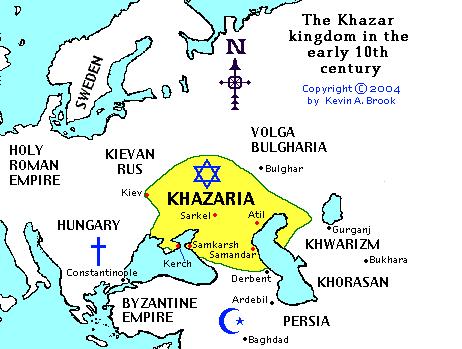
BB: They call themselves Jews though their ancestors never set foot in Palestine.

BB: They call themselves Jews though their ancestors never set foot in Palestine.

BB: The Real American History

BB: Books to read

BB: Books to read

BB: News Reels

BB: News Reels

BB: Misc. (Vids and other stuff)

BB: Misc. (Vids and other stuff)

BB: 9/11(Michael Moore)

BB: 9/11(Michael Moore)
Click link below for movie

BB: 9/11

The Gift of 9/11 Sept. 2008
Smoke and Dust Mar. 2009 *
Sunday Doodles Mar. 2009 *
Lessons from Oz June 2009 *
The 6,000 Feb. 2010 *

Gadgets

Gadgets
Misc.